

1M/3M/5M/10M Victron Orion-Tr Smart 12/12 30A Non-Isolated DC-DC Charger Kit


1M/3M/5M/10M Victron Orion-Tr Smart 12/12 30A Non-Isolated DC-DC Charger Kit
1M/3M/5M/10M Victron Orion-Tr Smart 12/12 30A Non-Isolated DC-DC Charger Kit
23 en existencias
No se pudo cargar la disponibilidad de retiro
- VICTRON ENERGY DEALER
- UK BASED CUSTOMER SUPPORT
- WE'RE RATED EXCELLENT ON TRUSTPILOT
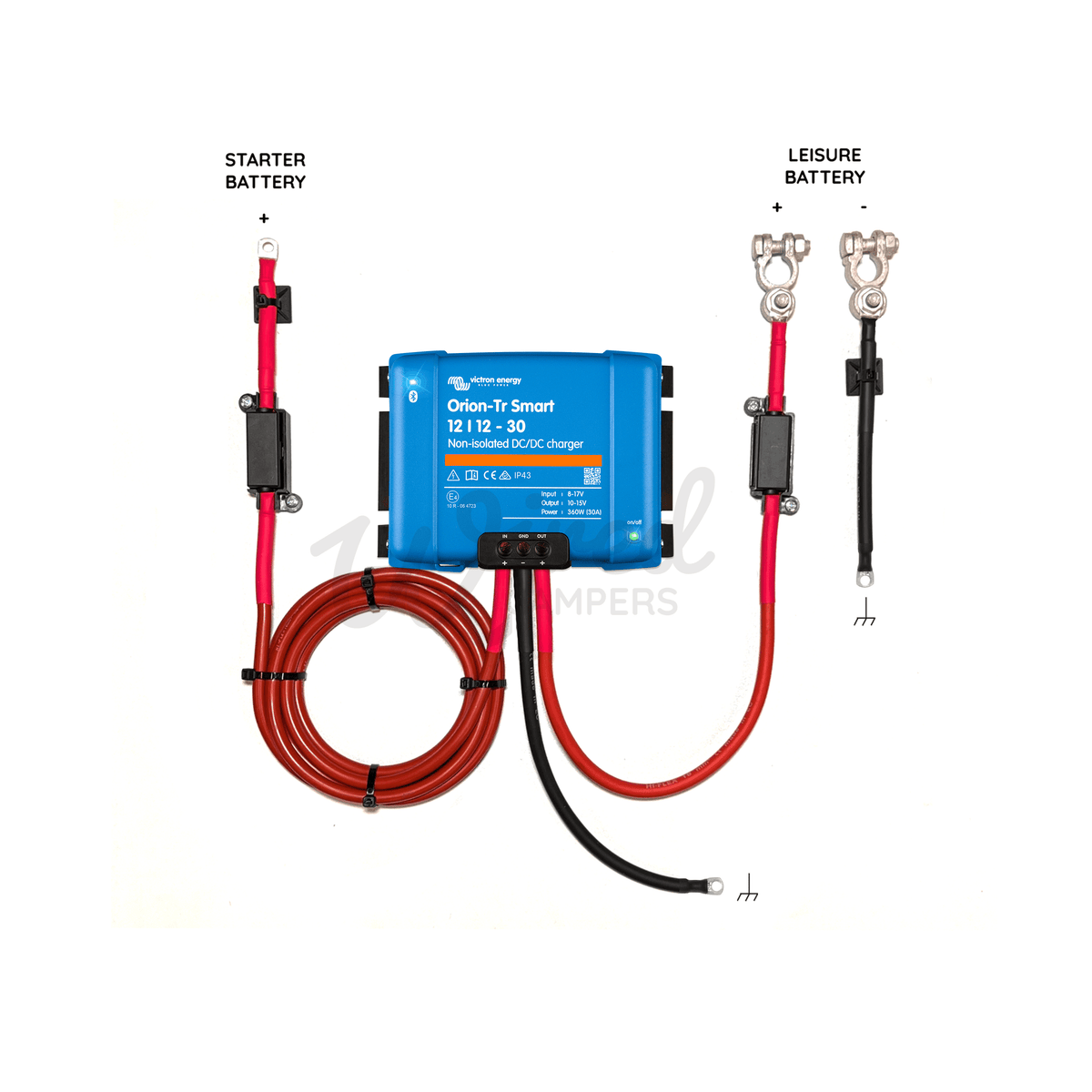
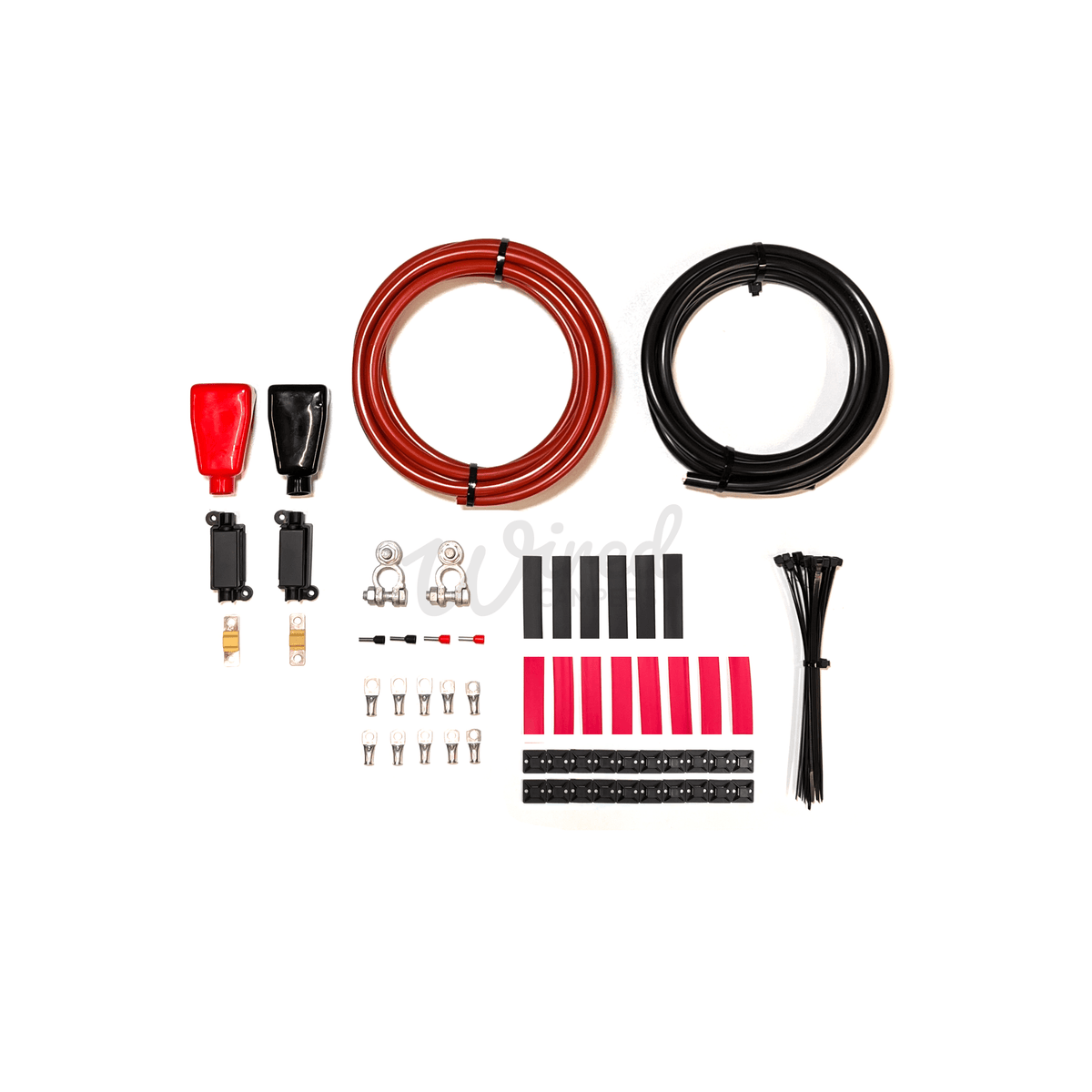
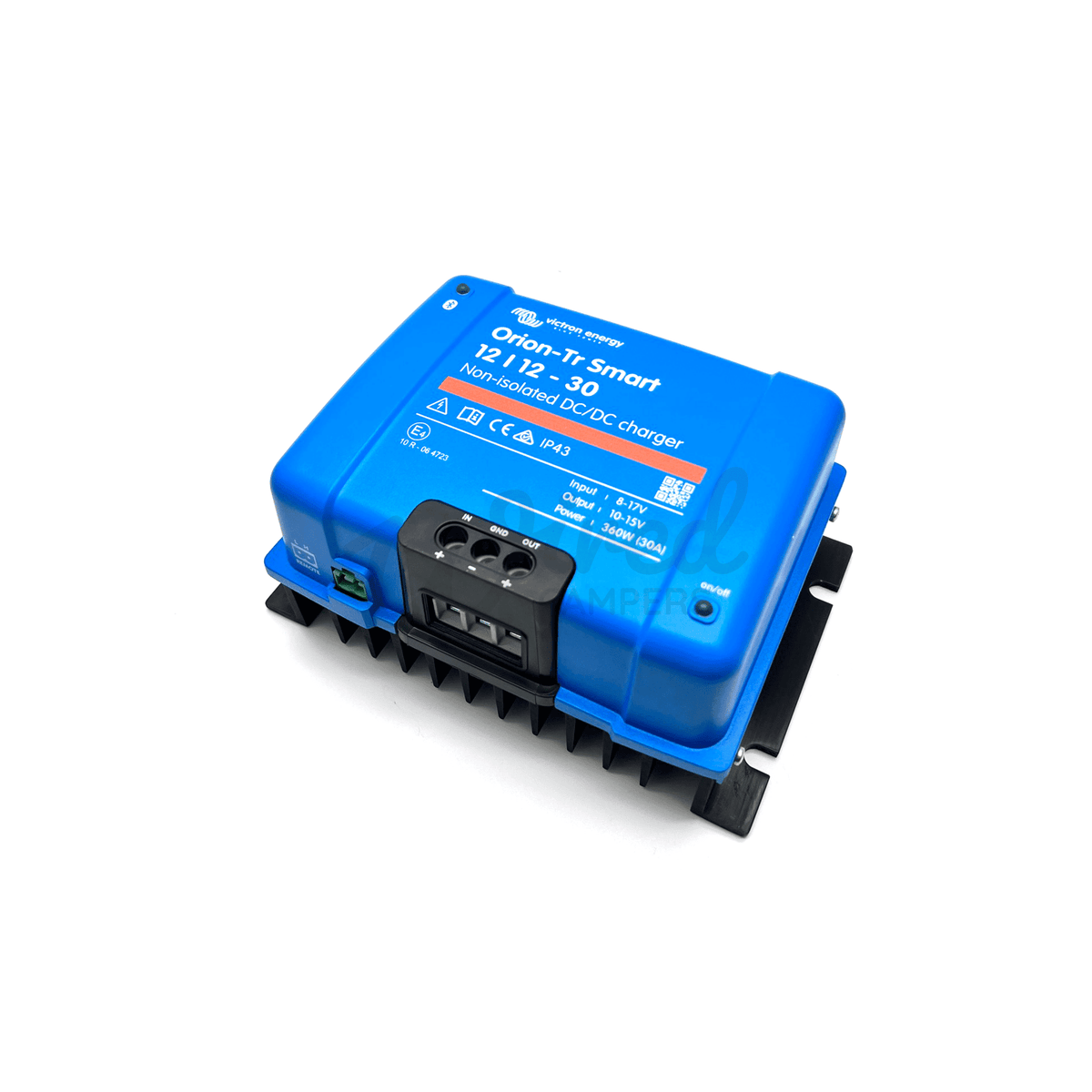
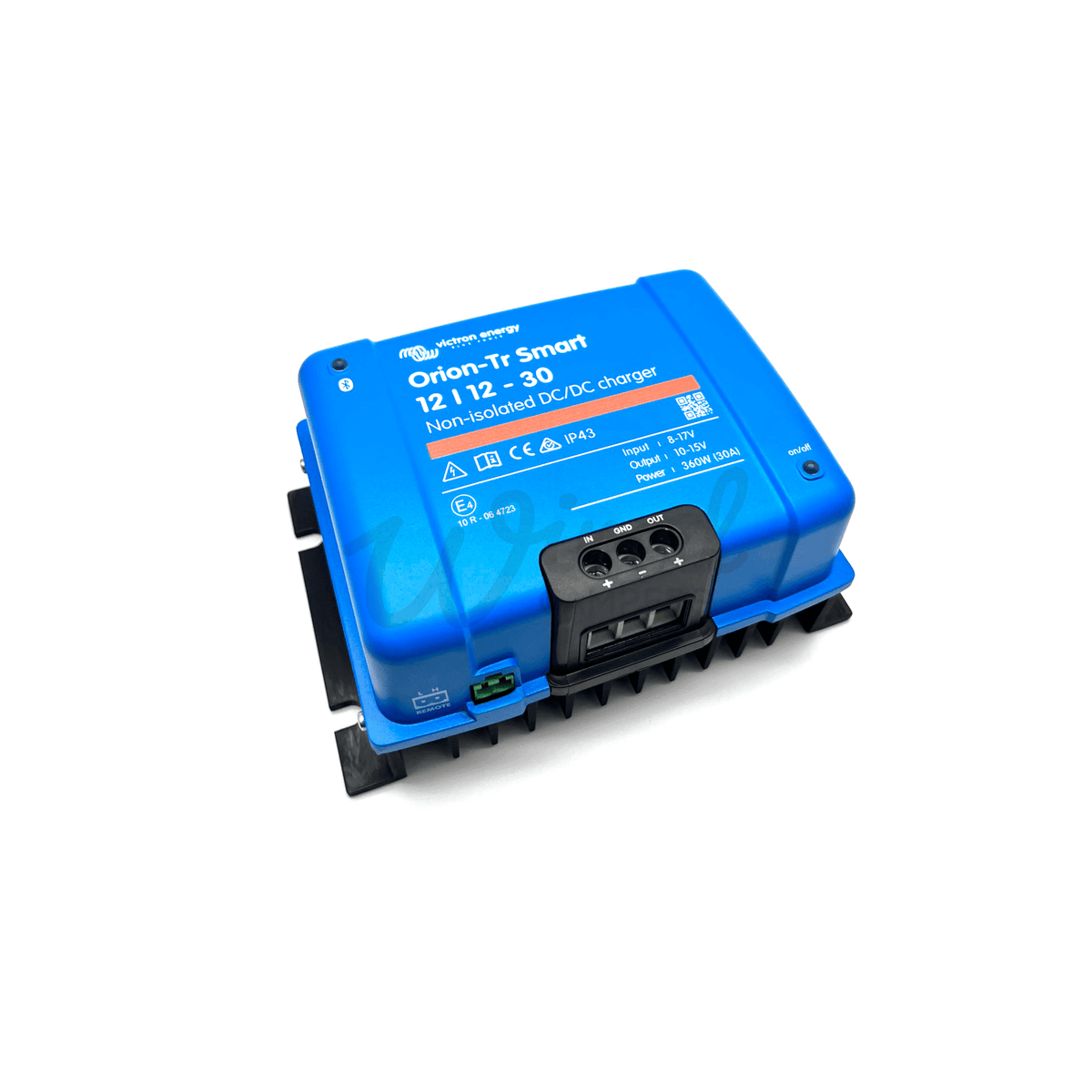

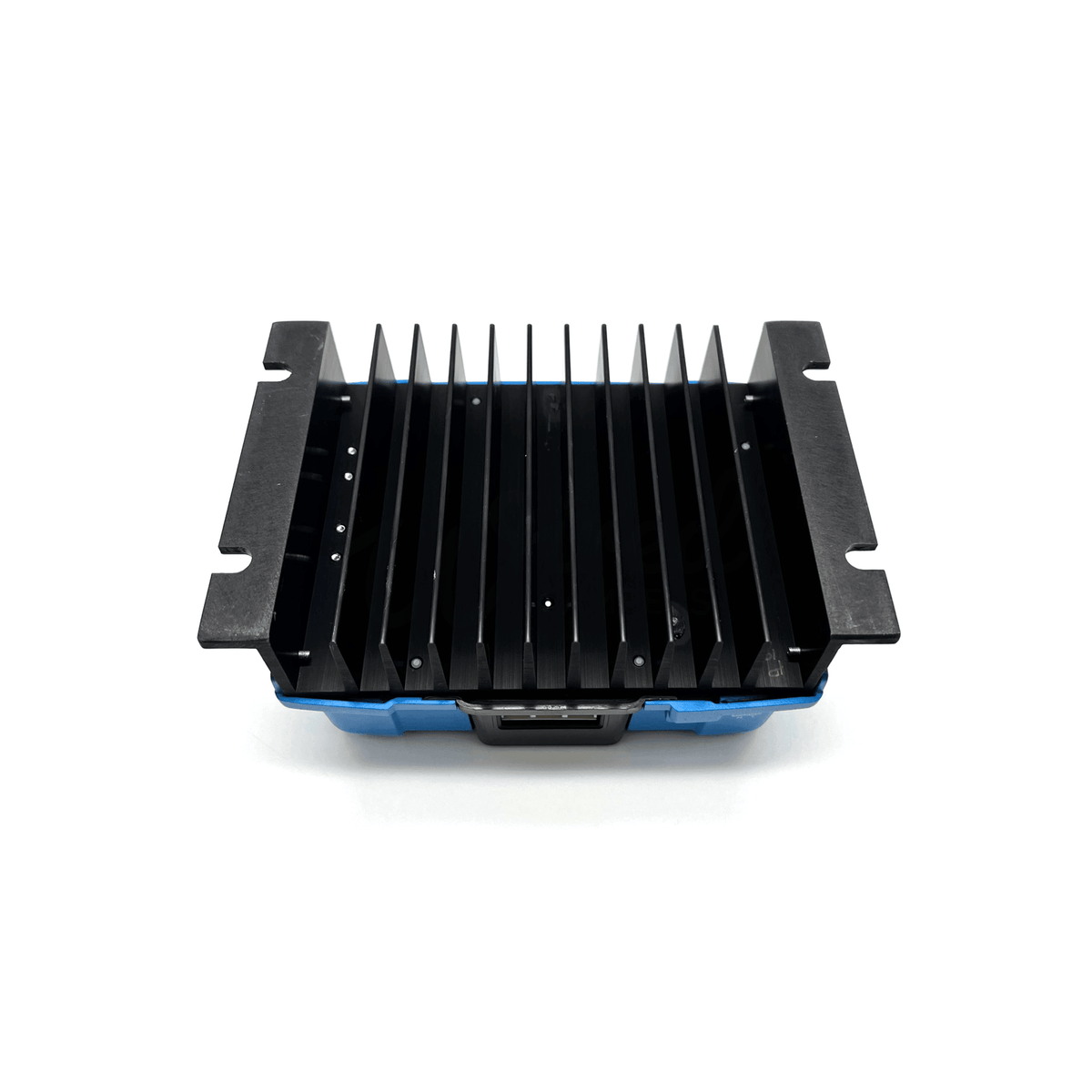

We've put this kit together to supply everything you need to wire up this Non-Isolated 30A Victron Energy Orion-Tr Smart DC-DC charger.
For use in dual battery systems in vehicles where the alternator and the starter battery are used to charge the leisure battery. The unit can be monitored and programmed via Bluetooth and can be remotely controlled via a remote on/off switch and has an engine running detection mechanism.
KIT CONTENTS
- Victron Orion-Tr Smart DC-DC 12/12-30A DC-DC Non-Isolated Charger (360W)
- 1M/3M/5M/10M 16mm2 Red hi-flex battery cable
- 1M/3M 16mm2 Black hi-flex battery cable
- Positive and negative leisure battery terminal set (8mm post)
- 2 X PVC battery terminal covers
- 2 X Bolt down MIDI fuse holders
- 2 X 60 AMP MIDI fuses
- 2 X 16mm2 8mm Hole copper crimp terminals
- 7 X 16mm2 6mm Hole copper crimp terminals
- 3 X 16mm2 Boot lace ferrules
- 8 X 70mm Red heat shrink sleeve
- 4 X 70mm Black heat shrink sleeve
- 20 X Self adhesive cable tie bases
- 20 X Cable ties
TECHNICAL INFORMATION
The Orion-Tr Smart charger is suitable for both lead acid and lithium batteries.
- Input voltage range - 10-17V
- Under voltage shut down - 7V
- Under voltage restart - 7.5V
- Nominal output voltage - 12.2V
- Output voltage adjust range - 10-15V
- Cont. output current at nominal output voltage and 40 °C - 30A
- Cont. output power at 25 °C - 430W
- Cont. output power at 40 °C - 360W
- Efficiency - 87%
- No load input current - < 80 mA
- Standby current - Less than 1mA
- DC connection - Screw terminals
- Maximum cable cross-section - 16 mm² AWG6
- Weight - 1.8 kg
- Dimensions - 130 x 186 x 80 mm
- Part Number - ORI121236140
- GTIN - 8719076048954
ADDITIONAL IMPORTANT INFORMATION
As with all the kits and layouts provided on our site, they serve as a guide only and we recommend all wiring and installation is carried out by a qualified professional. Disconnect all AC and DC power sources to prevent accidental shock. It is the installer’s responsibility to ensure compliance with all the applicable installation codes, regulations, and to ensure the equipment is fitted correctly.
Please note, this is in kit form so will require assembly (crimping/cutting cables).
What's the difference between a Non-Isolated and an Isolated Victron Orion Tr-Smart?
The main difference between the Victron Orion-Tr Smart Isolated and Non-Isolated DC-DC chargers is how the negative (earth) connections are handled.
Both chargers perform the same basic function: charging a leisure battery from the vehicle's alternator or starter battery, but they are designed for different electrical installations.
Non-Isolated Victron Orion
The non-isolated version has a common negative connection between the starter battery and leisure battery.
This is ideal for most camper van conversions where both batteries use the vehicle chassis as their negative return.
Example: A VW Transporter with a starter battery and lithium leisure battery, both sharing the vehicle's chassis earth.
Isolated Victron Orion
The isolated version keeps the input and output negative connections electrically separate.
This allows the starter battery and leisure battery systems to use different negative connections without electrically joining them through the charger.
Example: A boat where the starter battery and domestic battery systems need to remain electrically isolated, or a specialist vehicle with separate earthing arrangements.
Which should you choose for a camper van?
For a typical camper van conversion, the Non-Isolated Orion-Tr Smart is usually the most suitable option, provided both battery systems share a common negative.
There is generally no charging performance advantage to using the isolated version.
However, an isolated charger can still be used in an installation with a common negative. It simply provides the option of keeping the two negative systems separate where required.
So in simple terms...
If both batteries share the vehicle's chassis earth, choose non-isolated. If the two electrical systems must remain electrically separate, choose isolated.
